<?xml version="1.0" encoding="UTF-8"?>
<rss version="2.0"
	xmlns:content="http://purl.org/rss/1.0/modules/content/"
	xmlns:wfw="http://wellformedweb.org/CommentAPI/"
	xmlns:dc="http://purl.org/dc/elements/1.1/"
	xmlns:atom="http://www.w3.org/2005/Atom"
	xmlns:sy="http://purl.org/rss/1.0/modules/syndication/"
	xmlns:slash="http://purl.org/rss/1.0/modules/slash/"
	>

<channel>
	<title></title>
	<atom:link href="http://www.ronstauffer.com/blog/feed/" rel="self" type="application/rss+xml" />
	<link>http://www.ronstauffer.com/blog</link>
	<description></description>
	<lastBuildDate>Tue, 15 May 2012 06:03:50 +0000</lastBuildDate>
	<language>en</language>
	<sy:updatePeriod>hourly</sy:updatePeriod>
	<sy:updateFrequency>1</sy:updateFrequency>
	<generator>http://wordpress.org/?v=3.3.2</generator>
<xhtml:meta xmlns:xhtml="http://www.w3.org/1999/xhtml" name="robots" content="noindex" />
		<item>
		<title>Parking Problems in Downtown Colorado Springs</title>
		<link>http://www.ronstauffer.com/blog/parking-problems-in-downtown-colorado-springs/</link>
		<comments>http://www.ronstauffer.com/blog/parking-problems-in-downtown-colorado-springs/#comments</comments>
		<pubDate>Thu, 03 May 2012 06:31:57 +0000</pubDate>
		<dc:creator>Ron Stauffer</dc:creator>
				<category><![CDATA[Colorado Springs]]></category>

		<guid isPermaLink="false">http://www.ronstauffer.com/blog/?p=1667013880</guid>
		<description><![CDATA[Colorado Springs is a great city, and I am blessed to be able to work and play here. I particularly like our downtown area&#8230; it&#8217;s the heart of the Springs; it&#8217;s where our city and county government operations are based, &#8230; <a href="http://www.ronstauffer.com/blog/parking-problems-in-downtown-colorado-springs/">Continue reading <span class="meta-nav">&#8594;</span></a>]]></description>
			<content:encoded><![CDATA[<p style="text-align: justify;">Colorado Springs is a great city, and I am blessed to be able to work and play here. I particularly like our downtown area&#8230; it&#8217;s the heart of the Springs; it&#8217;s where our city and county government operations are based, it&#8217;s where community thrives, it&#8217;s where our public events take place, and it&#8217;s where business gets done. There are many, many great aspects to downtown Colorado Springs.<span id="more-1667013880"></span></p>
<p style="text-align: justify;">Like every city, our city isn&#8217;t perfect and downtown has its fair share of issues and challenges (crime, low vacancy, panhandling, etc). But I&#8217;d like to call attention to what I think is a very big obstacle in our goal for making downtown hospitable, yet is one with the simplest solution: metered parking.</p>
<p style="text-align: justify;">There are two specific ways I believe parking downtown is challenged: one regarding the parking meters themselves, and the other regarding the EZ Park card, which was intended for making metered parking easier.</p>
<p style="text-align: justify;">First things first—as anyone who has spent time downtown knows, almost all the parking spots on the streets are metered. This is par for the course in the downtown area of just about any city that I&#8217;ve been to, so I&#8217;m not necessarily taking issue with that. (Though the simple act of having metered parking <em>at all</em> does give people incentive to go elsewhere, such as the University Village Center and Shops at Briargate shopping centers, which both have unlimited free parking.) What I do have an issue with is how <em>complicated</em> our metered parking is. Here are several ways I think they&#8217;re too complicated:</p>
<ol style="text-align: justify;">
<li>Most of the parking meters only accept quarters and dimes. This is a minor irritation, but when combined with everything else, can be a real annoyance. It means you must carry quarters and dimes with you at all times if you&#8217;re planning on being downtown.</li>
<li>Colorado Springs can be very windy at times, and windy gusts containing sand and dust can effectively &#8220;sandblast&#8221; anything made of glass after a few years, making them so occluded you can&#8217;t see through them. The parking meters are not immune to this, and the little window on the front of the meter that shows how much time you have left is clouded over on several of the meters downtown. The result? You&#8217;re not able to read what the meter says, which renders an entire meter essentially useless for parking.</li>
<li>Occasionally, a meter will take your quarter(s), and not give you any time because it&#8217;s broken. The meters have no identifying numbers that I can see, so there&#8217;s no easy way to identify which meter is which, and there&#8217;s no phone number on the meter to call if you have problems. So if you park at a meter, and hop out of your car and drop a quarter in and receive no time, there&#8217;s no remedy except to get back into your car, go find another meter and try again, and pity the sucker who comes after you and makes the same mistake.</li>
<li>All of the parking meters have a &#8220;maximum&#8221; limit on the number of hours you&#8217;re allowed. Meaning, you can&#8217;t just shovel $6.00 worth of quarters into the meters to buy several hours—you&#8217;re limited by the meter&#8217;s allowance. There are three basic types of meters downtown: one-hour, two-hour, and four-hour meters. The problem is that a <em>significant</em> amount of them are one-hour meters. If you have a meeting at a coffee shop that you expect to last for approximately one hour, you can&#8217;t use the one-hour meter because you will be out of time before you have a chance to walk back to your car. Despite this, most people do in fact park at a one-hour meter, and what often happens in the course of a business meeting is you&#8217;ll hear someone awkwardly excuse himself to &#8220;feed the meter&#8221; and walk back to his car (sometimes more than a block away) where he&#8217;ll stuff perhaps 30 minutes&#8217; worth of quarters in the meter and hustle back to his meeting and apologize to his party for the interruption. This is a frequent occurrence, and it&#8217;s an extremely convoluted way for people to make their meetings and comply with the metered parking. But even as complicated as this &#8220;quick fix&#8221; is—it&#8217;s &#8220;technically&#8221; against the rules. Most meters specifically state that you must move your vehicle after the allotted time; you can&#8217;t simply recharge the meter. This is a warning not heeded, because it&#8217;s such an inconvenience.</li>
</ol>
<p style="text-align: justify;">My second big issue with the downtown parking situation is that there is supposedly a solution to all this coin-wrangling—the <em>EZ Park card</em>. But before you run out and buy one, please note that the solution itself presents even more issues than the problem. The EZ Park card is like a credit card for the meters that&#8217;s powered by a flash memory chip. They&#8217;re advertised on the meters themselves, and people often talk about how getting one makes parking so much easier. So several months ago, I figured I would give this a shot and purchased an EZ Park card. Instead of solving my problems, it actually made things more complicated. Here&#8217;s why:</p>
<ol style="text-align: justify;">
<li>Having an EZ Park card doesn&#8217;t solve any of the problems with the one/two/four hour meters. It doesn&#8217;t resolve any of the hassle of parking at a one hour meter. You still have to run out and &#8220;feed the meter,&#8221; which is still technically breaking the rules.</li>
<li>Needing an EZ Park card instead of simply being able to use a credit card is a hassle. It&#8217;s a separate card you need to carry around with you, and you need to maintain a balance on it and recharge it frequently.</li>
<li>There are two ways to purchase an EZ Card: online, and at the parking administration office on Nevada Street in the parking garage. For purchasing a new card, the online option is simple. However, the administration office has very limited hours so if you want to visit the office, you have to go during banker&#8217;s hours. They&#8217;re only open five days a week, from 8-5, and they&#8217;re closed during lunch. For those who work normal hours for an employer, this means you can&#8217;t reload your card during your lunch break or even after work.</li>
<li>While buying a card online is very convenient, you CANNOT reload it online. You can only reload it at a downtown kiosk or in-person at the parking office. This is a major inconvenience.</li>
<li>You cannot check your balance online, either. The only way to check your card balance is to find a meter, insert your card, view the balance, then take your card out. Or do the same at the parking office. This is a hassle.</li>
<li>As I mentioned above, there are a few kiosks where you can reload your card, which is great in theory. <em>In practice</em>, however, I&#8217;ve found that they are fraught with problems:</li>
<ul>
<li>First, there are only three kiosks.</li>
<li>Second, the kiosks are small, hard to find, and are placed inconspicuously at random intersections in the middle of the sidewalk. If you didn&#8217;t know what they looked like, odds are you would never find them.</li>
<li>Third, most of the time, the kiosks don&#8217;t even work. I&#8217;ve tried all of them at various times on various days, with more than one EZ Card and with three separate credit cards—I have <span style="text-decoration: underline;">never</span> been able to reload my card. I always get a message saying &#8220;card cannot be read.&#8221; I brought this to the attention of the parking office and was told &#8220;<em>People complain about that all the time. Because it&#8217;s so windy downtown, dust gets into the card reader so it can&#8217;t make contact with the flash chip in the card.</em>&#8221; If that&#8217;s the case, why are they still running? If they don&#8217;t work, let&#8217;s take them down.</li>
<li>Fourth, you cannot buy an EZ Card at a kiosk—you can only reload them.</li>
</ul>
<li>When reloading your card, you can only load it in increments of $10 or $20. Want to put $25 or $50 on your card? Tough luck.</li>
<li>Not all meters accept the EZ Park card. There is no rhyme or reason to this either (i.e. something easy to remember like &#8220;<em>meters on Wahsatch only take coins</em>&#8220;)—it&#8217;s completely sporadic, and you won&#8217;t know until you&#8217;ve actually parked at the meter and gotten out of your car. Why? <em>Because the meters that don&#8217;t accept cards are exactly the same as the ones that do</em>—<span style="text-decoration: underline;">they even have the slot to insert the card</span>. The only way you know it doesn&#8217;t take cards is by reading the label on the meter that says &#8220;this meter does not accept EZ Park cards.&#8221; This is especially frustrating for users of the Penrose Library, where NONE of the meters accept the EZ Park card. As a governmental institution, the library should be hooked into the city system. It simply makes no sense for them not to.</li>
<li>Some meters are broken in a way that the coin slots work, but the card reader doesn&#8217;t. When you go to use your card, you&#8217;ll get an &#8220;ERR 6&#8243; message on the screen. The card can&#8217;t be read. Since the meters have no easily identifiable identification numbers, and there&#8217;s no hotline for assistance, there&#8217;s no way to &#8220;tag&#8221; a meter as broken. You simply have to find another meter.</li>
<li>The meters have hours of operation. The &#8220;hours&#8221; are from 9am-6pm. You do not need to pay for metered parking before nine or after six. This is excellent. But&#8230; the problem is that EZ Park cards always load the <em>maximum time available on the meter</em>. For example: when you park at a four hour meter, it will put four hours on your card unless you return sooner to &#8220;clock out.&#8221; This means if you park at a four hour meter at 5:53pm (i.e. 7 minutes before the cutoff where you don&#8217;t even have to pay anymore), the meter will load four whole hours on your card, and keep on burning until those four hours are done, even though the metered parking technically &#8220;ended&#8221; at 6:00pm. To prevent this, you would have to run back to your car and turn it off after the 7 minutes are up, or you&#8217;ll be charged for four hours of parking. I mentioned this to the staff at the parking office, and was told &#8220;<em>We know it&#8217;s a hassle, but the meters just aren&#8217;t smart enough to figure it out so you should keep some quarters with you to use in that instance.</em>&#8221; They&#8217;re correct that this avoids the problem, but it entirely defeats the purpose of the EZ Park card! Why have an electronic card to relieve people of the hassle of needing to carry quarters with them at all times, if they not have to use both?</li>
<li>There are several parking garages downtown that allow you to park for much longer periods of time than the meters, but they don&#8217;t EZ Park cards, and even if the cost is commensurate, or even cheaper, it&#8217;s still not a solution. The garages are good for people who will be downtown all day long. For those who move around from meeting to meeting, they&#8217;re no convenience. And it&#8217;s not a good enough solution to say that one system is shoddy so there&#8217;s a different system available. I think it makes much more sense to actually fix the shoddy system (the meters) or simply remove them altogether.</li>
</ol>
<p style="text-align: justify;">My intention is not to simply gripe about the way things are, or point the finger and blame others. My desire is to call attention to the situation because I think a lot of people are unaware of the hassle involved in parking downtown, or if they are, they may be forgetting that it discourages people from being downtown and using the meters. I want to see business thrive downtown, and I believe there are currently some obstacles in the way, and parking seems to be one of the most basic functions in doing business downtown—you can&#8217;t do business here if you can&#8217;t get here.</p>
<p style="text-align: justify;">Some solutions I propose to the issues outlined above are as follows, (and I make no claims about any of these being &#8220;easy&#8221; or &#8220;inexpensive&#8221; fixes—I&#8217;m not a city planner, I&#8217;m just a citizen who doesn&#8217;t like the status quo):</p>
<ol style="text-align: justify;">
<li>Number all the meters with unique identifiers and place a label on each with a phone number for people to call in case a meter is out of order.</li>
<li>Have someone (perhaps the one who collects the coins from the meters) check the status of each meter. I would suggest checking the status of the following:</li>
<ol>
<li>The readability of the screen (looking for sand-blasted windows, condensation forming on the inside, etc)</li>
<li>Verify that the slots work correctly, BOTH the slot for the EZ Card as well as the change slot.</li>
<li>If a meter is out of order, placing a hood over it that states this.</li>
</ol>
<li>Change the system to allow for either:</li>
<ol>
<li>A) Using credit cards at the meters instead of the EZ Park card</li>
<li>B) Allowing the purchase, reloading and balance checking of the EZ Park card online. And allowing the ability to put any dollar amount on the card.</li>
</ol>
<li>If none of these are possible, at least open the administration office during lunchtime and Saturdays.</li>
</ol>
<p style="text-align: justify;">Downtown businesses and the city government needs to remember that locals already have other options outside of downtown to work, play and shop. I&#8217;ve already mentioned University Village Center and Shops at Briargate, but there are many other options for Colorado Springers and tourists to visit when they&#8217;ve got money to burn. And despite how &#8220;easy&#8221; we tell them it is to buy an EZ Park card, all they&#8217;re going to remember is how much of a hassle it was last time they visited downtown, fumbling around for loose change in their car&#8217;s ashtray.</p>
<p style="text-align: justify;">If budgets are a concern (as I imagine they would be—fixing a legacy electronic system is going to be expensive), I wonder if helping organize a &#8220;meter crew&#8221; of volunteers who can put some time together on a few Saturdays per year would solve some of the problem. If the City is willing to give the people the tools, I&#8217;m sure downtowners are willing to put those tools into action as a gesture of support and goodwill.</p>
]]></content:encoded>
			<wfw:commentRss>http://www.ronstauffer.com/blog/parking-problems-in-downtown-colorado-springs/feed/</wfw:commentRss>
		<slash:comments>0</slash:comments>
		</item>
		<item>
		<title>NFC Payments are a Dumb, Dumb Idea</title>
		<link>http://www.ronstauffer.com/blog/nfc-payments-are-a-dumb-dumb-idea/</link>
		<comments>http://www.ronstauffer.com/blog/nfc-payments-are-a-dumb-dumb-idea/#comments</comments>
		<pubDate>Thu, 12 Apr 2012 05:08:43 +0000</pubDate>
		<dc:creator>Ron Stauffer</dc:creator>
				<category><![CDATA[Predictions]]></category>

		<guid isPermaLink="false">http://www.ronstauffer.com/blog/?p=1667014302</guid>
		<description><![CDATA[Among the many fledgling technologies creating buzz in 2012, I personally think that NFC (Near Field Communication) is the worst. Though all NFC technically means is &#8220;transactions made over radio frequency at close range,&#8221; the context you&#8217;re probably most familiar &#8230; <a href="http://www.ronstauffer.com/blog/nfc-payments-are-a-dumb-dumb-idea/">Continue reading <span class="meta-nav">&#8594;</span></a>]]></description>
			<content:encoded><![CDATA[<p style="text-align: justify;">Among the many fledgling technologies creating buzz in 2012, I personally think that NFC (Near Field Communication) is the worst. Though all NFC technically means is &#8220;transactions made over radio frequency at close range,&#8221; the context you&#8217;re probably most familiar with is in regards to NFC <em>payments</em>. Put plainly, this is waving-your-phone-in-front-of-a–detector-thingy technology.<span id="more-1667014302"></span></p>
<p style="text-align: justify;">It&#8217;s similar to how a grocery store clerk slides your gallon of milk over a bar code reader until he hears that familiar &#8220;boop&#8221; sound at the cash register&#8230; except in this case, there&#8217;s no barcode—it&#8217;s activated by radio waves at close proximity.</p>
<p style="text-align: justify;">In my humble opinion, people are talking about NFC payments because it&#8217;s shiny and new. Not because it&#8217;s any good. I actually think NFC is a very bad technology. Here are several reasons why:</p>
<ul style="text-align: justify;">
<li><strong>It doesn&#8217;t solve any problems.</strong> The problem that NFC payments is purportedly trying to solve is the &#8220;pain&#8221; of carrying credit and debit cards around in your wallet. But this is hardly a problem. I&#8217;ve never heard anyone complain about the hassle of carrying around credit cards. Credit cards and their magnetic strips are an awesome technology. The security is incredibly strong, you can cancel a card instantly if it&#8217;s lost or stolen, they&#8217;re thin and lightweight, and most importantly, <span style="text-decoration: underline;">they have no cash value</span> and are easily replaceable. Your phone is <em>not</em> easily replaceable.</li>
<li><strong>People don&#8217;t need one more reason to fear losing their smartphones.</strong> People are already essentially incapacitated when stuck without their smartphones. Adding one more reason to fear losing your phone is not helpful. And losing the ability to make payments if you don&#8217;t have your phone is downright dangerous.</li>
<li><strong>Mass-scale adoption of NFC readers is not going to happen.</strong> NFC technology is complicated, it&#8217;s expensive, and it&#8217;s probably prone to breaking. On the other hand, credit card readers have been around for over 50 years. NFC is a losing proposition for merchants. They&#8217;ll quickly see that there&#8217;s no incentive to accepting payments this way and they&#8217;ll avoid upgrading their machines for as long as they possibly can.</li>
<li><strong>If your phone battery dies, you can&#8217;t make any payments.</strong> Again, adding a whole new layer of technology to do the same thing that a thin plastic card does is not a smart move and only creates another obstacle for you if your phone is inoperable. Aside from having your phone lost or stolen, which are major hassles, just the minor inconvenience of having your phone battery die (as smartphone batteries are prone to doing) can disable your payment methods. And that&#8217;s just as bad as your phone being lost or stolen.</li>
<li><strong>NFC is a toy, not a serious tool.</strong> The proof lies in the fact that only Google is pushing NFC, mainly through their Android line of phones. And only a company like Google would, because they have the money to throw at silly pet projects that will never take off. Perhaps there is one company can give NFC the boost in credibility and omnipresence it needs for merchants to begrudgingly accept it. But that company is Apple, not Google. And so far, Apple&#8217;s not biting. I think that&#8217;s a really smart move. It&#8217;s smart for them as a company, it&#8217;s smart for them not to support Google&#8217;s push, and it&#8217;s a smart choice for Apple&#8217;s customers—who don&#8217;t need it.</li>
<li><strong>It&#8217;s not new technology.</strong> The Arby&#8217;s a few miles from my house has had a sign up on the cash register saying &#8220;Blink a Salad&#8221; for at least seven years, maybe eight. The &#8220;blink&#8221; concept was how merchant services companies tried to sell NFC for years—offering a &#8220;special&#8221; credit card that you could wave over their magical reader without having to swipe your card. I&#8217;ve never used this payment method at Arby&#8217;s, or anywhere else. And apparently, neither have a heck of a lot of other people.</li>
<li><strong>It&#8217;s a security nightmare.</strong> When you&#8217;re sending payments using wireless signals, there&#8217;s a tremendous opportunity for hackers that are snooping around in your proximity to find your payment details in the air. What&#8217;s to stop them? And what to notify you that your data&#8217;s been stolen? We can&#8217;t even secure local wi-fi networks, and that&#8217;s been a major problem for years. There&#8217;s no way we&#8217;ll be able to secure NFC at least until that&#8217;s solved.</li>
</ul>
<p style="text-align: justify;">NFC is an esoteric technology made by tech geeks to impress other tech geeks. That&#8217;s it. In my book, that&#8217;s a terrible reason for a technology to exist. Technology <em>should </em>be about making tasks easier, faster, and cheaper for the masses. Truly innovative technologies allow us to do things we haven&#8217;t been able to do before (as SCUBA allowed us to breathe underwater) or reduce the manpower it takes to accomplish hard work (as the wheel minimized friction and gave us transportation).</p>
<p style="text-align: justify;">Think about all the innovations that fit these criteria: the pulley; the light bulb; the internal combustion engine; the internet; the iPhone, and so on. These are everyday devices that have completely transformed the way people do business and do <em>life.</em> NFC doesn&#8217;t do any of these things. It just muddies the water and complicates something that used to be simple. That&#8217;s the worst kind of technology.</p>
<p style="text-align: justify;">I think the only real hope that NFC gives us is the chance is that part of the technology will spin off into something different and far more useful (think of all the spun-off technologies that came as a result of NASA research, such as memory foam and flame-retardants).</p>
<p style="text-align: justify;">I predict that NFC payments will die. Hopefully, they&#8217;ll die in obscurity like the other technology I really hate: QR codes. But I&#8217;ll save that rant for later.</p>
]]></content:encoded>
			<wfw:commentRss>http://www.ronstauffer.com/blog/nfc-payments-are-a-dumb-dumb-idea/feed/</wfw:commentRss>
		<slash:comments>2</slash:comments>
		</item>
		<item>
		<title>Video: Things I Learned At My First Video Shoot</title>
		<link>http://www.ronstauffer.com/blog/video-things-i-learned-at-my-first-video-shoot/</link>
		<comments>http://www.ronstauffer.com/blog/video-things-i-learned-at-my-first-video-shoot/#comments</comments>
		<pubDate>Sat, 07 Apr 2012 23:24:28 +0000</pubDate>
		<dc:creator>Ron Stauffer</dc:creator>
				<category><![CDATA[Videos]]></category>

		<guid isPermaLink="false">http://www.ronstauffer.com/blog/?p=1667014282</guid>
		<description><![CDATA[I recently worked with a videographer to make two videos for a new video marketing service I wanted to start. I&#8217;d never really stood in front of a camera before, and thought it would be fun to do. I&#8217;m a &#8230; <a href="http://www.ronstauffer.com/blog/video-things-i-learned-at-my-first-video-shoot/">Continue reading <span class="meta-nav">&#8594;</span></a>]]></description>
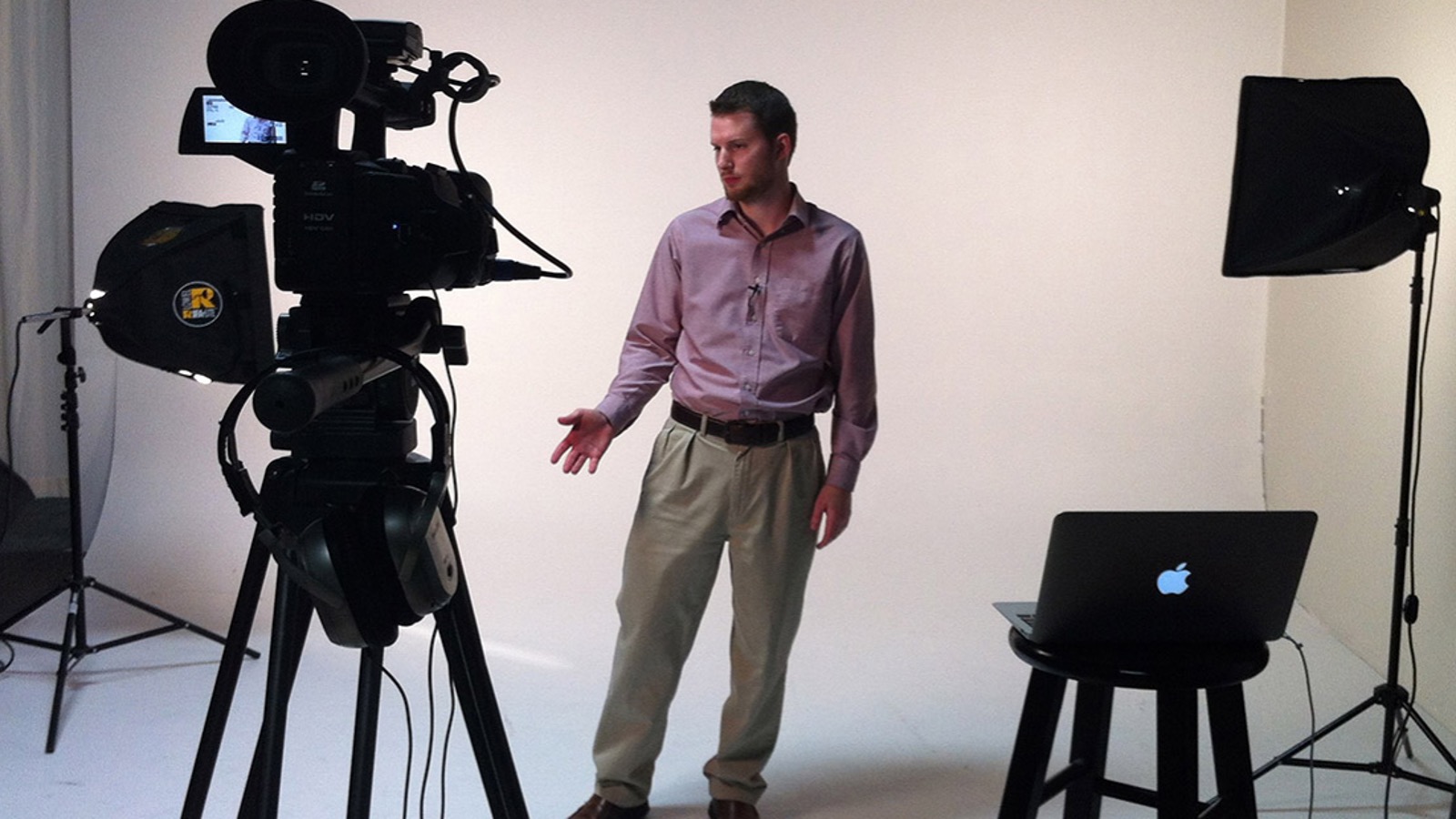
			<content:encoded><![CDATA[<p style="text-align: justify;">I recently worked with a videographer to make two videos for a new video marketing service I wanted to start. I&#8217;d never really stood in front of a camera before, and thought it would be fun to do. I&#8217;m a big fan of online video, as I&#8217;ve explained before, but something that drives me nuts is the massive amount of online video that&#8217;s of embarassing quality and I didn&#8217;t want to do that. So I hired a professional videographer, rented out a studio, and did a shoot and we ended up with two videos that I&#8217;m quite proud of.</p>
<p style="text-align: justify;">Here&#8217;s a fun blooper reel I made to showcase some of the fun parts of the shoot:<span id="more-1667014282"></span></p>
<p><iframe src="http://www.youtube.com/embed/oTynv__svSM" frameborder="0" width="600" height="360"></iframe></p>
<p style="text-align: justify;">I&#8217;ve never done this before, but I&#8217;m a member of a Toastmasters club, so I&#8217;m frequently standing up and talking in front of people and figured this would be similar to that. I was both right and wrong. I learned several things throughout this video shoot. We rented some space at a photographer&#8217;s studio, I wrote the a script for both videos, and it took us about four hours to tape it all on a Tuesday night. Then Andy (the videographer) and I went home, exhausted around midnight and I waited to see what Andy&#8217;s video-editing skills could come up with. I never looked at any of the footage during the shoot, so the finished product was going to be a complete surprise to me.</p>
<p style="text-align: justify;">With this being my first run, I&#8217;m proud to say we didn&#8217;t make any major mistakes. I did learn a few, small lessons about how I&#8217;d do it differently next time. Here are some of the takeaways I had from our initial shoot, in no particular order:</p>
<ul>
<li>Standing in front of a camera and reciting lines is a LOT harder than it looks.</li>
<li>The camera sees <em>everything</em>. I had a blemish on my face that I was self-conscious about, so I put some makeup (concealer) on, but in the end, I think the concealer was just as obvious.</li>
<li>There&#8217;s a lot of downtime during a video shoot.</li>
<li>It takes a long time to get set up properly (it took us at least an hour to get the lighting, cameras and microphones ready).</li>
<li>Teleprompters don&#8217;t work. &#8230;at least not for me. My brilliant idea was that I would read the script I wrote off my laptop hiding right under the camera. We tried that at first, but it looked fake, and it was hard for me to minimize the distraction of switching my focus back and forth between the camera and the laptop. Lesson learned: just memorize your lines instead.</li>
<li>Writing a good script is REALLY important, and it needs to be ready to go when it&#8217;s time to shoot. But no matter how good it is, you&#8217;ll pretty much ad-lib when you&#8217;re standing in front of the camera, and you&#8217;ll leave out 25-30% of the script. You need to be ok with that.</li>
<li>Personal habits become very obvious. Example: I learned that I clear my throat a LOT. I never noticed this before. I also stroke my facial hair when I think, and frequently lick my lips. I had never noticed this before either.</li>
<li>Once you screw up a line and start laughing, it&#8217;s really hard to get serious again and finish the line.</li>
<li>The glamorous part of video is the final product. Filming is awkward, reciting lines is hard, and the editing process totally sucks.</li>
<li>Editing video footage is EXTREMELY time consuming, and it&#8217;s a thankless task. Nobody ever thinks about a film editor when watching a video. Case in point: the video we made about Twitter took ten hours to edit. We ended up with 4:07 minutes that made the final cut. That&#8217;s a lot of work for a short clip.</li>
<li>With some lines, you&#8217;ll just have to say them over, and over, and over again, until you get them right.</li>
<li>You can&#8217;t be a perfectionist. If you can&#8217;t say your line right after the 15th time, you&#8217;ve got to give up and move on to something else.</li>
<li>The lighting used in a video shoot is really powerful. I stood in front of the lights for several hours and it was overwhelming—they were hot, and very bright in my face.</li>
<li>You may have to pose in weird positions for a long time while the videographer tries focusing and shooting from different angles. You&#8217;ve got to be comfortable holding a strange pose for a while.</li>
<li>When it&#8217;s all said and done, the end product is extremely rewarding.</li>
<li>Apple Final Cut Pro is an awesome program, and simple enough for me to use without any instructions.</li>
<li>You have to be ok with awkward silences. There are a LOT of awkward silences during a video shoot. Don&#8217;t try to fill the silence. Just accept that it&#8217;s awkward.</li>
<li>You HAVE to be judicious when editing footage. No matter how much you like a particular take, it&#8217;s got to fit in with the theme and focus. If it doesn&#8217;t, you&#8217;ve gotta cut it—no matter how long you worked on it or how funny it is.</li>
<li>Check your progress before doing the whole shoot. Do a test run for 5-10 minutes, then review what you&#8217;ve got. Because I didn&#8217;t see the video until it was completely edited, I didn&#8217;t realize the little habits and twitches I had until the whole thing was over. If I had checked on everything during the shoot, I could have made adjustments before we&#8217;d finished recording all that video.</li>
<li>My final observation: Andy Mitchell is a <a href="http://www.amitchellmedia.com">really good videographer</a>. He&#8217;s fun to work with, he was very patient with my many takes, and the finished product turned out like I&#8217;d hoped.</li>
</ul>
<p>In conclusion, they were fun to make, and definitely worth doing. I think a lot more companies should use video for marketing. If you&#8217;re ever interested in it, let me know. I can hook you up with the right team.</p>
]]></content:encoded>
			<wfw:commentRss>http://www.ronstauffer.com/blog/video-things-i-learned-at-my-first-video-shoot/feed/</wfw:commentRss>
		<slash:comments>0</slash:comments>
		</item>
		<item>
		<title>How Not to Connect on LinkedIn</title>
		<link>http://www.ronstauffer.com/blog/how-not-to-connect-on-linkedin/</link>
		<comments>http://www.ronstauffer.com/blog/how-not-to-connect-on-linkedin/#comments</comments>
		<pubDate>Thu, 29 Mar 2012 06:22:52 +0000</pubDate>
		<dc:creator>Ron Stauffer</dc:creator>
				<category><![CDATA[Ron's Rants]]></category>

		<guid isPermaLink="false">http://www.ronstauffer.com/blog/?p=1667014151</guid>
		<description><![CDATA[Recently I&#8217;ve gotten several requests from people to connect on LinkedIn. Which is normally fine. But what I find annoying is when somebody I don&#8217;t know—at all—sends a request to connect with no note, or instructions, or any other indicator &#8230; <a href="http://www.ronstauffer.com/blog/how-not-to-connect-on-linkedin/">Continue reading <span class="meta-nav">&#8594;</span></a>]]></description>
			<content:encoded><![CDATA[<p style="text-align: justify;">Recently I&#8217;ve gotten several requests from people to connect on LinkedIn. Which is normally fine. But what I find annoying is when somebody I don&#8217;t know—at all—sends a request to connect with no note, or instructions, or any other indicator of <em>who on earth </em>he or she is.</p>
<p style="text-align: justify;">When I get these, I do NOT hit the &#8220;<em>accept</em>&#8221; button, but instead hit the &#8220;<em>reply (don&#8217;t accept yet)</em>&#8221; button located just below it, and compose this same short, sweet message:<span id="more-1667014151"></span></p>
<p style="text-align: justify;"><img class="size-full wp-image-1667014165 aligncenter" title="Um, who are you?" src="http://www.ronstauffer.com/blog/wp-content/uploads/linkedin-request.png" alt="linkedin request" width="600" height="490" /></p>
<p style="text-align: justify;">After this point, I usually get one of four responses:</p>
<ol style="text-align: justify;">
<li>&#8220;No, we haven&#8217;t met.&#8221;</li>
<li>&#8220;No, we haven&#8217;t met&#8230; but I saw that you&#8217;re a part of (such and such) group and I&#8217;m also a big fan of that group and wondered if you&#8217;d like to connect and talk more about (such and such topic) at the next group meeting.&#8221;</li>
<li>&#8220;No, we haven&#8217;t met, but you and I both know (so and so) and he mentioned that I should get in touch with you.&#8221;</li>
<li>(no response at all)</li>
</ol>
<p style="text-align: justify;"><strong>Response #1 is awful.</strong> I&#8217;m not a snob, but if I don&#8217;t know you, and you send a request to connect and you can&#8217;t give me a good reason (or one that even makes sense) I&#8217;m just going to delete your request. What a waste of time. These people clearly don&#8217;t understand how LinkedIn works. It&#8217;s about making connections with real live people, not blindly following accounts you don&#8217;t know or care about. LinkedIn is <span style="text-decoration: underline;">not</span> a numbers game. And the LinkedIn website even specifically says &#8220;<em>Invitations should only be sent to people you know personally</em>.&#8221;</p>
<p style="text-align: justify;"><strong>Response #2 is still not very good, but it&#8217;s at least passable.</strong> What would have been <em>better</em> than this is telling me how you know me and why we should connect<em> in the first place, </em>when you sent your initial connection request. Don&#8217;t wait for me to try to figure out who you are first and email you back. That&#8217;s just bad form.</p>
<p style="text-align: justify;">Here&#8217;s a better way: let&#8217;s say I want to connect with Taa Dixon, from <a href="http://www.720media.com/">720 Media</a>, who I met the other day. We don&#8217;t have any mutual friends, and she may or may not remember me from the social mixer we went to together recently. Do NOT just use the standard &#8220;<em>I&#8217;d like to add you to my professional network on LinkedIn</em>&#8221; message in your request. Delete it and start over. Instead, try something like this:</p>
<p style="text-align: justify;"><img class="size-full wp-image-1667014171 aligncenter" title="linkedin-connection-request" src="http://www.ronstauffer.com/blog/wp-content/uploads/linkedin-connection-request.png" alt="Nice, personalized LinkedIn connection request" width="576" height="546" /></p>
<p style="text-align: justify;">This accomplishes everything I need. 1) It tells her who I am, 2) gives her the context of how and when we met, 3) reminds her what I look like (because there were a lot of people at the event), and 4) it also clarifies what the &#8220;next steps&#8221; are. These connection requests generally work really well.</p>
<p style="text-align: justify;"><strong>Response #3 is also passable, but as with #2, it shows that you don&#8217;t know how to use LinkedIn.</strong> If we truly have a mutual acquaintance and you want to use that as the basis for why we should connect, use the built-in LinkedIn function made <em>expressly for that purpose</em>—get introduced. It&#8217;s very simple. Just look at the image below.</p>
<p style="text-align: justify;"><img class="size-full wp-image-1667014159 aligncenter" title="Getting introduced on linkedin" src="http://www.ronstauffer.com/blog/wp-content/uploads/linkedin-get-introduced.png" alt="Getting introduced on linkedin" width="812" height="385" /></p>
<p style="text-align: justify;">Let&#8217;s say I don&#8217;t know Colorado Springs City Councilman Tim Leigh, but really want to. (Incidentally, I do, but I also know he has no idea what to do with LinkedIn Connection Requests, so I&#8217;ve never sent him one. But I digress&#8230;) I wouldn&#8217;t just click on &#8220;connect&#8221; at the top. I would instead click on &#8220;get introduced through a connection.&#8221; Then I can choose which of my friends I know is a mutual friend between myself and Tim Leigh, and I can send that person a message asking for an introduction to Tim and explain why it&#8217;s a good idea.</p>
<p style="text-align: justify;">It&#8217;s a common courtesy, and it mirrors real-life behavior. You don&#8217;t just walk up to the Mayor on the street and say &#8220;<em>Hi, I&#8217;m Ron. I want some of your time.</em>&#8221; (Well, I suppose you could, but you won&#8217;t get anywhere—hence the entire point of this blog post&#8230; because that&#8217;s what people are essentially doing on LinkedIn). Instead, if you really wanted to get to know the Mayor, you&#8217;d identify who you already know that knows him, then come up with a really good reason for why he or she should introduce you, then ask that individual out for lunch, buy their food, and politely make your request. At least that&#8217;s how I would do it. And in my experience, this works really well.</p>
<p style="text-align: justify;">The big faux pas with approach #3 wasn&#8217;t even necessarily that the stranger who sent me a connection request didn&#8217;t know me. It was that he didn&#8217;t even tell me who he was, or why I should connect with him. I&#8217;d even take an honest &#8220;<em>Hey, I don&#8217;t know you but wanted to connect because my sales are short this month and I want to give you my sales pitch because I&#8217;m desperate.</em>&#8221; over this approach. It&#8217;s against the LinkedIn rules, but at least it&#8217;s honest and descriptive.</p>
<p style="text-align: justify;"><strong>Response #4 obviously just gets trashed.</strong> If you ask to connect and I ask who you are and you don&#8217;t even respond, you clearly don&#8217;t care. And then I don&#8217;t care to connect.</p>
<p style="text-align: justify;">LinkedIn is a Social Networking site, but it&#8217;s also the Social Networking site with the highest demand for etiquette. You have to use it to <em>network, socially</em>. Most or all of the same rules apply on LinkedIn as they do in &#8220;real life.&#8221; Please treat people online the same as you would in person. I&#8217;m sure you&#8217;ll notice a favorable response rate. Heck, I might even respond to your connection request. (Kidding&#8230;)</p>
]]></content:encoded>
			<wfw:commentRss>http://www.ronstauffer.com/blog/how-not-to-connect-on-linkedin/feed/</wfw:commentRss>
		<slash:comments>0</slash:comments>
		</item>
		<item>
		<title>City Councilman Tim Leigh</title>
		<link>http://www.ronstauffer.com/blog/city-councilman-tim-leigh/</link>
		<comments>http://www.ronstauffer.com/blog/city-councilman-tim-leigh/#comments</comments>
		<pubDate>Thu, 29 Mar 2012 04:15:35 +0000</pubDate>
		<dc:creator>Ron Stauffer</dc:creator>
				<category><![CDATA[Colorado Springs]]></category>

		<guid isPermaLink="false">http://www.ronstauffer.com/blog/?p=1667014134</guid>
		<description><![CDATA[Nearly everybody in Colorado Springs has, at one time or another, heard of Tim Leigh. And if you&#8217;ve heard of Tim Leigh, it wasn&#8217;t just once. You&#8217;ve heard about him many, many times. He&#8217;s a Colorado Springs City Councilman (at-large), &#8230; <a href="http://www.ronstauffer.com/blog/city-councilman-tim-leigh/">Continue reading <span class="meta-nav">&#8594;</span></a>]]></description>
			<content:encoded><![CDATA[<p style="text-align: justify;"><img class="alignright size-medium wp-image-1667014140" title="colorado-springs-city-councilman-tim-leigh" src="http://www.ronstauffer.com/blog/wp-content/uploads/colorado-springs-city-councilman-tim-leigh-193x300.jpg" alt="" width="193" height="300" />Nearly everybody in Colorado Springs has, at one time or another, heard of Tim Leigh. And if you&#8217;ve heard of Tim Leigh, it wasn&#8217;t just once. You&#8217;ve heard about him many, many times. He&#8217;s a Colorado Springs City Councilman (at-large), and with all the attention he gets, you may not believe that he&#8217;s actually one of the newest members on council. <span id="more-1667014134"></span>He&#8217;s been a councilor for all of one year, and yet he&#8217;s constantly in the news. Almost every day someone at the Gazette or the Independent has something to say about him. Sometimes, it&#8217;s nice. Sometimes, it isn&#8217;t. Occasionally, it&#8217;s downright nasty. But that, as they say, is politics.</p>
<p style="text-align: justify;">I know Tim, and I&#8217;ve gotta say, I really respect him. I&#8217;ve talked with him about how the media likes to poke fun at him all the time and he&#8217;s said he doesn&#8217;t care at all. In his words, his job is to ask questions and make decisions that affect the citizens that elected him. Not to try and please the media. Lots of politicians say that, but do they really mean it?</p>
<p style="text-align: justify;">I&#8217;m really not much for politics and don&#8217;t have any political exposure at all (except for when my Dad ran for State Senate in California, but I was 7 at the time.) Other than that, I don&#8217;t have an appetite for the finger pointing and blaming that seems to take up most of the time politicians have. But I do want to point out one thing that sets Tim Leigh apart from most of our other local elected officials: he&#8217;s honest. He&#8217;s so honest it annoys some people. He&#8217;s one of those guys that has no filter between his brain and his mouth—if he&#8217;s thinking it, you&#8217;re going to hear it. Sometimes, that can drive people crazy. But in an elected official, I think it&#8217;s awesome.</p>
<p style="text-align: justify;">Think about it&#8230; what are the chief complaints you hear about our government in Colorado Springs? If you pay any attention to the blogs, the editorials, and even the old fashioned &#8220;local buzz&#8221; on the street, you&#8217;ll hear about how accountability and transparency are what we need lots more of. I agree with this sentiment but I think most people aren&#8217;t paying attention when they say this, at least in Tim&#8217;s case. Arguably, he&#8217;s too honest for his own good. And, as you&#8217;ll note when he refers to himself as &#8220;<em>Little Timmy Leigh from Grand Forks North Dakota,</em>&#8221; he doesn&#8217;t take himself too seriously either.</p>
<p style="text-align: justify;">If you go to <a href="http://www.timleigh.com/blog/its-time">www.timleigh.com</a>, you can read everything he&#8217;s thinking, right there on his blog. No government mouthpiece needed&#8230; no official spokesman or press secretary necessary. Just the pure, possibly-offensive thoughts of your elected official. Isn&#8217;t that what everybody is asking for? You want accountability? Holy cow—this guy openly calls for Memorial Hospital to suspend their CEO, Dr. Larry McEvoy due to allegations of mismanagement&#8230; right on his blog. He asked that people consider raising his official pay from $6,250/yr to $96,000/yr plus benefits. &#8230;right on his blog. That&#8217;s what he was thinking, so now you know. I&#8217;ve heard people say he talks too much. Again, isn&#8217;t that good for a man holding elected office? Don&#8217;t we want to know everything our representatives are thinking? He recently told a reporter about how anyone who doesn&#8217;t like that he illegally climbs the Manitou Incline is welcome to come <a href="http://twitter.com/#!/danieljchacon/status/162228458267746305">make a citizen&#8217;s arrest</a>. That&#8217;s a joke, but admitting that you break the law by climbing the Incline is also transparent. How many other elected officials have broken the same laws by hiking the Incline and simply don&#8217;t talk about it?</p>
<p style="text-align: justify;">If you aren&#8217;t following Tim Leigh on his blog, at least <a href="http://www.timleigh.com/join-the-conversation">sign up for his email newsletter</a>. Over 2,500 subscribers get his ideas in their inbox as-it-happens, and if you disagree with anything he says, just hit reply and say so. He&#8217;ll email you back. How many elected officials can you say that about? Heck, I don&#8217;t agree with everything he says, but I always appreciate that I know what&#8217;s going on in his mind and that I&#8217;m welcome to give him my feedback. (On a strange note, Tim must not sleep very much because his emails are often sent out before 6:00am. Maybe it&#8217;s because he stays up all night reading suggestions from supporters and hate mail from detractors.)</p>
<p style="text-align: justify;">I leave you with one final point: I have no idea why the other city councilors don&#8217;t do the same. They have access to all the same tools, and they&#8217;re reading all the same official documents. So why do they not also take advantage of the power of the pen and voice their own opinions? The only difference between Tim Leigh and those councilors who disagree with him from time to time is that <em>he gets to control the message because he&#8217;s the one delivering it.</em> I think that&#8217;s brilliant. That&#8217;s not just politically brilliant, that&#8217;s <em>Art of War</em> brilliant.</p>
<p style="text-align: justify;">Tim Leigh&#8217;s got my vote.</p>
]]></content:encoded>
			<wfw:commentRss>http://www.ronstauffer.com/blog/city-councilman-tim-leigh/feed/</wfw:commentRss>
		<slash:comments>0</slash:comments>
		</item>
		<item>
		<title>Customer Quote: The Cloud</title>
		<link>http://www.ronstauffer.com/blog/customer-quote-the-cloud/</link>
		<comments>http://www.ronstauffer.com/blog/customer-quote-the-cloud/#comments</comments>
		<pubDate>Thu, 29 Mar 2012 00:43:29 +0000</pubDate>
		<dc:creator>Ron Stauffer</dc:creator>
				<category><![CDATA[Customer Quotes]]></category>

		<guid isPermaLink="false">http://www.ronstauffer.com/blog/?p=1667014130</guid>
		<description><![CDATA[&#8220;Hey Ron, am I on the cloud?&#8221; -Quote from an Awesome Customer]]></description>
			<content:encoded><![CDATA[<p><em>&#8220;Hey Ron, am I on the cloud?&#8221;</em></p>
<p>-Quote from an Awesome Customer</p>
]]></content:encoded>
			<wfw:commentRss>http://www.ronstauffer.com/blog/customer-quote-the-cloud/feed/</wfw:commentRss>
		<slash:comments>0</slash:comments>
		</item>
		<item>
		<title>Lessons From a Customer</title>
		<link>http://www.ronstauffer.com/blog/lessons-from-a-customer/</link>
		<comments>http://www.ronstauffer.com/blog/lessons-from-a-customer/#comments</comments>
		<pubDate>Thu, 29 Mar 2012 00:28:56 +0000</pubDate>
		<dc:creator>Ron Stauffer</dc:creator>
				<category><![CDATA[Lessons]]></category>

		<guid isPermaLink="false">http://www.ronstauffer.com/blog/?p=1667014122</guid>
		<description><![CDATA[A few years ago, I met with a customer who was an older gentleman in the roadbase and paving industry. I was asking him my standard questions before coming up with a proposal for a new website. I started asked &#8230; <a href="http://www.ronstauffer.com/blog/lessons-from-a-customer/">Continue reading <span class="meta-nav">&#8594;</span></a>]]></description>
			<content:encoded><![CDATA[<p style="text-align: justify;">A few years ago, I met with a customer who was an older gentleman in the roadbase and paving industry. I was asking him my standard questions before coming up with a proposal for a new website. I started asked things like &#8220;<em>Do you have any social media accounts? Do you do any offline advertising? Who&#8217;s your target customer?</em>&#8221; and he cut me off in the middle of my questioning. <span id="more-1667014122"></span>He kindly told me the following, which I&#8217;ll never forget:</p>
<blockquote>
<p style="text-align: justify;">&#8220;Ron, I only have a seventh grade education. I dropped out and got a full-time job before I even made it to high school. I&#8217;ve been in the paving business for more than 30 years, and I&#8217;m good at laying asphalt. But I don&#8217;t understand these questions you&#8217;re asking me and I don&#8217;t own a computer. Do you see my phone? It only has ten buttons on it. I&#8217;m relying on you to tell me what I need.&#8221;</p>
</blockquote>
<p style="text-align: justify;">I found this interesting, not because of what he said, but because of what he <em>meant.</em> People have occasionally told me to slow down before when I was explaining cloud computing or using Facebook to grow your customer base, but nobody had put it in such blunt terms before. Here are the things I think he meant by what he was saying:</p>
<ul style="text-align: justify;">
<li>I&#8217;m good at what I do, but technology makes me feel uncomfortable.</li>
<li>When you young kids talk about complicated things like &#8220;web servers,&#8221; even though you&#8217;re not saying I&#8217;m dumb, I feel dumb. I don&#8217;t like that.</li>
<li>I&#8217;m not sure what I need—that&#8217;s why I&#8217;m hiring you. I need to you tell me what I should and shouldn&#8217;t be paying attention to.</li>
<li>Please speak slowly. Don&#8217;t talk down to me, but speak slowly.</li>
<li>Don&#8217;t assume I know what you mean. Explain what a &#8220;content management system&#8221; is.</li>
</ul>
<p style="text-align: justify;">I think about this all the time when working with clients. And I really appreciate the guy&#8217;s honesty. It&#8217;s a delicate balance, trying to assure a customer that you respect him and appreciate where he is in his career, but still taking the time to explain everything properly.</p>
<p style="text-align: justify;">Oftentimes, if you assume people know what you&#8217;re talking about, you can ramble on and on and they&#8217;ll never stop you and say &#8220;<em>hold on—I don&#8217;t know what a &#8216;bounce rate&#8217; is—can you explain that?</em>&#8220;. They&#8217;ll just smile and nod without getting any of it. So you&#8217;ve gotta walk that fine line, going slow enough to make sure they understand you, but not so fast you barrage them with too much info.</p>
<p style="text-align: justify;">If you can actually pull it off, you often win the job. Sometimes it works, sometimes it doesn&#8217;t. But it&#8217;s worth trying.</p>
]]></content:encoded>
			<wfw:commentRss>http://www.ronstauffer.com/blog/lessons-from-a-customer/feed/</wfw:commentRss>
		<slash:comments>0</slash:comments>
		</item>
		<item>
		<title>Ron&#8217;s Rants: Copyright Notices</title>
		<link>http://www.ronstauffer.com/blog/rons-rants-copyright-notices/</link>
		<comments>http://www.ronstauffer.com/blog/rons-rants-copyright-notices/#comments</comments>
		<pubDate>Wed, 28 Mar 2012 19:23:32 +0000</pubDate>
		<dc:creator>Ron Stauffer</dc:creator>
				<category><![CDATA[Ron's Rants]]></category>

		<guid isPermaLink="false">http://www.ronstauffer.com/blog/?p=1667014109</guid>
		<description><![CDATA[Ok, rant time. You know how sometimes you&#8217;re searching for something online, or looking through a photo album for an event, and you find a great photo, but it&#8217;s ruined because the photographer put a giant, obtrusive copyright notice right &#8230; <a href="http://www.ronstauffer.com/blog/rons-rants-copyright-notices/">Continue reading <span class="meta-nav">&#8594;</span></a>]]></description>
			<content:encoded><![CDATA[<p style="text-align: justify;">Ok, rant time. You know how sometimes you&#8217;re searching for something online, or looking through a photo album for an event, and you find a great photo, but it&#8217;s ruined because the photographer put a giant, obtrusive copyright notice right on the photo? I hate it when that happens.</p>
<p style="text-align: justify;"><img class="size-full wp-image-1667014110 aligncenter" title="totally annoying copyright notice" src="http://www.ronstauffer.com/blog/wp-content/uploads/anoying-copyright-notice.jpg" alt="totally annoying copyright notice" width="616" height="406" /></p>
<p style="text-align: justify;"><span id="more-1667014109"></span>I&#8217;m not talking about an elegant copyright notice, or a neat, clean line with the photographer&#8217;s information towards the bottom of the photo. I&#8217;m talking about the really obnoxious kind that screams out at you like someone&#8217;s blowing an air horn in your face. I really, really, hate these and don&#8217;t see the point. I really think most photographers are far too obtrusive in the way they protect their images. I certainly understand the need to protect their images, and I&#8217;m all about following copyright laws. Heck, I&#8217;ve taken my fair share of photos, and took a year and a half of photography classes at the local community college so I understand the work that goes into a photo and the way it&#8217;s an artistic expression that means a lot to you. I can imagine the frustration of having people rip you off.</p>
<p style="text-align: justify;">But putting big honking messages all over your image doesn&#8217;t just prevent people from ripping you off—it makes you look like a jerk. It feels to me like you&#8217;re just yelling to get everybody&#8217;s attention, so they know you took the photo. Do you really need that much credit?</p>
<p style="text-align: justify;">My suggestion is that photographers should let their work speak for itself. Your photograph is a work of art. Don&#8217;t ruin it by signing your name all over it. Have you even seen a Picasso painting with a big giant &#8220;COPYRIGHT PABLO PICASSO&#8221; all over it? I haven&#8217;t. He just wrote &#8220;Picasso&#8221; on his. I&#8217;ve heard the same went for Pierre-Auguste Renoir. He just wrote &#8220;Renoir&#8221; in a subtle fashion in the bottom right corner.</p>
<p style="text-align: justify;">If you&#8217;re selling your images online and don&#8217;t want people to steal your images, then it&#8217;s pretty simple—just give out small thumbnails. You shouldn&#8217;t be posting your full-size images anyway. And there are ways to track down image thieves as well. So you don&#8217;t need to lose sleep over people taking your full-size high resolution images if you&#8217;re being careful.</p>
<p style="text-align: justify;">The best perspective I&#8217;ve heard on this issue comes from Paul Kohlman, a good friend of mine and a <a href="http://www.paulkohlman.com">commercial photographer</a> I work with from time to time. He&#8217;s had his photography printed dozens times in national design magazines and has won numerous awards for his photos. Here&#8217;s what he told me once (paraphrased):</p>
<blockquote><p>&#8220;I don&#8217;t stamp those big ugly notices on my images. I think they ruin the photo. When I get a photo printed in a magazine, I like to put my credit sideways, in small print. I want people to be so impressed with the <em>art</em> that they think to themselves &#8216;<em>Wow! Who is this photographer?&#8217;</em> and then let them search around a bit to find my info. Those are the people who end up hiring me anyway.&#8221;</p></blockquote>
<p style="text-align: justify;">I think that&#8217;s brilliant. And humble. If you&#8217;re a photographer, please be more subtle. I&#8217;d like to enjoy your art, not be yelled at about who took the image.</p>
]]></content:encoded>
			<wfw:commentRss>http://www.ronstauffer.com/blog/rons-rants-copyright-notices/feed/</wfw:commentRss>
		<slash:comments>0</slash:comments>
		</item>
		<item>
		<title>Never Sit in the Same Chair</title>
		<link>http://www.ronstauffer.com/blog/never-sit-in-the-same-chair/</link>
		<comments>http://www.ronstauffer.com/blog/never-sit-in-the-same-chair/#comments</comments>
		<pubDate>Thu, 22 Mar 2012 00:34:39 +0000</pubDate>
		<dc:creator>Ron Stauffer</dc:creator>
				<category><![CDATA[About Me]]></category>

		<guid isPermaLink="false">http://www.ronstauffer.com/blog/?p=1667014065</guid>
		<description><![CDATA[I like taking classes. Especially classes outside of a traditional school environment, and when I don&#8217;t have to do homework. So I take lots of them. I take extracurricular classes all the time. Free classes, paid classes&#8230; I&#8217;ve taken classes &#8230; <a href="http://www.ronstauffer.com/blog/never-sit-in-the-same-chair/">Continue reading <span class="meta-nav">&#8594;</span></a>]]></description>
			<content:encoded><![CDATA[<p style="text-align: justify;">I like taking classes. Especially classes outside of a traditional school environment, and when I don&#8217;t have to do homework. So I take lots of them. I take extracurricular classes all the time. Free classes, paid classes&#8230; I&#8217;ve taken classes on all kinds of things: bonsai gardening workshops, how to get out of debt, public speaking, writing, basic accounting small businesses classes, Citizens&#8217; Academies put on by my local government, classes on social media, and much, much more. I have an insatiable appetite for learning.<span id="more-1667014065"></span></p>
<p style="text-align: justify;">When I take a class, I have a rule for myself: never sit in the same chair. Something funny I&#8217;ve noticed is that after the first time your class meets (if they do meet more than once), everybody starts to get territorial over &#8220;their&#8221; seat. They choose a spot in the beginning, and keep coming back to that same place each time. I really don&#8217;t see the point of doing this. Instead, I&#8217;m that annoying guy who shows up before you do in class and takes &#8220;your&#8221; seat. Why? Because it&#8217;s not your seat. It&#8217;s a seat that nobody was sitting in when I came into the room, and it looked good to me, so I took it. Nobody ever says anything, but I can tell from their faces that it bothers some people. And I really don&#8217;t care that much.</p>
<p style="text-align: justify;">I think everybody should switch seats, all the time. It&#8217;s amazing how much better you can get to learn about a subject, and get to know your fellow classmates if you keep moving around. Try it sometime—you&#8217;ll get to see your teacher from a new perspective, and you&#8217;ll probably learn more because you&#8217;re going to be less tempted to talk with your friends and more inclined to meet people you don&#8217;t know and learn their story.</p>
<p style="text-align: justify;">Also, you may have to try sitting in a new seat next time because I&#8217;ll probably take yours if you&#8217;re not careful.</p>
]]></content:encoded>
			<wfw:commentRss>http://www.ronstauffer.com/blog/never-sit-in-the-same-chair/feed/</wfw:commentRss>
		<slash:comments>0</slash:comments>
		</item>
		<item>
		<title>Should I Join a BNI Chapter?</title>
		<link>http://www.ronstauffer.com/blog/should-i-join-a-bni-chapter/</link>
		<comments>http://www.ronstauffer.com/blog/should-i-join-a-bni-chapter/#comments</comments>
		<pubDate>Sun, 19 Feb 2012 23:32:33 +0000</pubDate>
		<dc:creator>Ron Stauffer</dc:creator>
				<category><![CDATA[Business]]></category>

		<guid isPermaLink="false">http://www.ronstauffer.com/blog/?p=1667013906</guid>
		<description><![CDATA[I&#8217;m a guy who&#8217;s into networking, meeting other business people, and making relationships, and doing business. So, naturally, when I found out about BNI (Business Network International), I was absolutely hooked. I took a membership application home with me the &#8230; <a href="http://www.ronstauffer.com/blog/should-i-join-a-bni-chapter/">Continue reading <span class="meta-nav">&#8594;</span></a>]]></description>
			<content:encoded><![CDATA[<p style="text-align: justify;">I&#8217;m a guy who&#8217;s into networking, meeting other business people, and making relationships, and doing business. So, naturally, when I found out about BNI (Business Network International), I was absolutely hooked. I took a membership application home with me the first day, and brought it back the next week with payment. I didn&#8217;t know much about it, or how the meetings worked, but I loved that I found a group dedicated to meeting every week and passing business back and forth.<span id="more-1667013906"></span></p>
<p style="text-align: justify;">Eventually, I became more and more involved with the chapter I was a part of, and joined the membership committee, then was was nominated for Chapter Vice President and did that for about a year, finally becoming a BNI Ambassador right before I dropped out. You could say I was crazy about BNI, and it was true—I loved it. I was a member for just over two years, and found it to be a valuable addition to my professional life. In the second year, I made over 70% of my annual income through referrals from my BNI Chapter. &#8230;and that is money talking.</p>
<p style="text-align: justify;">Since that time, and since I&#8217;m not a member any more, I&#8217;ll occasionally talk with people who are thinking about joining a BNI chapter, and aren&#8217;t sure whether it&#8217;s a good fit for them or not. So here is my humble and honest recollection of my experience as a BNI member. In case you haven&#8217;t heard of BNI before and aren&#8217;t sure what I&#8217;m talking about, here&#8217;s a super-quick explanation of what BNI is: a membership organization where independent business people join the group and come to weekly meetings for the purpose of passing business referrals to each other. Pretty simple, right? It really is, at least on that level. So if you&#8217;re interested in joining, let me explain some quick requirements for membership.</p>
<h2 style="text-align: center;">Requirements for joining a BNI chapter:</h2>
<ul style="text-align: justify;">
<li>You must work full-time in your position. (i.e. no part-time employees allowed)</li>
<li>You must commit to showing up to the weekly meetings</li>
<li>You must be willing to give referrals to other members in the chapter, and follow up on the referrals you receive</li>
<li>You can&#8217;t be a member of another competing organization (defined as a business referral organization that meets weekly)</li>
<li>Only one person per industry may join a chapter</li>
</ul>
<p style="text-align: justify;">Still interested? Good! Here are some of the pros and cons of being a member of a BNI chapter.</p>
<h2 style="text-align: center;">Pros of being a BNI chapter member:</h2>
<p style="text-align: justify;"><strong>Joining a BNI chapter is an excellent way to get to know lots of business people very quickly.</strong> If you&#8217;re new to the town you live in, or just aren&#8217;t well-connected, joining a BNI Chapter is the fastest way I know of for meeting people and becoming known. It&#8217;s structured in such a way that you are required to meet with the other chapter members during the week and get to know their business, as well as talk about your own business. This was one of my favorite aspects of being a BNI Member. It ensures that you get to learn all about the other members, and they get to know all about you.<br />
<strong></strong></p>
<p style="text-align: justify;"><strong>Established BNI Members are generally trustworthy.</strong> While it&#8217;s not impossible to get burned by a BNI member, the system is structured so that there&#8217;s a LOT of accountability and transparency. If you purchase a product or service from a BNI member and he screws up, you can bet the rest of the chapter is going to find out. So he has an incentive to make things right to protect his reputation. This is good. As I said, this isn&#8217;t always foolproof—and the people who most often break this rule are the new members who haven&#8217;t already built up their reputation. But if you&#8217;re looking for a network of people in all kinds of industries who you have a good chance of being able to trust, BNI is for you.<br />
<strong></strong></p>
<p style="text-align: justify;"><strong>BNI is extremely structured.</strong> Something you&#8217;ll learn at &#8220;leadership training,&#8221; (which is, incidentally, mandatory), is that BNI has a strictly-enforced structure and process for everything. There are two mandatory meetings each year you&#8217;ll need to go to: Member Success Program (MSP), and Leadership Training (LT). This is where you learn alllllll the rules, and there are lots of them! What I learned to appreciate about their structure is that it makes it very easy for each member to know what is required of them at all times, and if you take advantage of the system, there&#8217;s a lot of support in place.<br />
<strong></strong></p>
<p style="text-align: justify;"><strong>BNI charges for membership.</strong> Why is this in the &#8220;pros&#8221; list? It is a good thing, in my opinion, because it keeps flakes from joining. You know the type&#8230; they show up for one meeting, get everything they can for free, talk loudly about all their products and services, and never come back. While there&#8217;s nothing wrong with that <em>per se</em>, I wasn&#8217;t interested in doing business with people who couldn&#8217;t afford to take their business serious enough to commit to joining a group instead of just trying to sell to people they didn&#8217;t know. There are lots of other free groups all over town that start up and shut down frequently due to non-committal people like that, and that&#8217;s ok for them, but BNI chapters are in it for the long run. And the dues you pay cover the charges for the paperwork and the corporate structure that keeps it afloat.<br />
<strong></strong></p>
<p style="text-align: justify;"><strong>Attendance is required.</strong> Why is this a good thing? For the same reason as above. People who can commit to show up every week are proving themselves to be dependable, generally trustworthy people. If they can&#8217;t commit to coming each week, that&#8217;s fine, but again, there are other groups for that. I liked the attendance requirement—it meant my willingness to get up early every Thursday morning at 6:00 to get ready for my BNI chapter meeting meant that others were doing the same. I appreciated that.<br />
<strong></strong></p>
<p style="text-align: justify;"><strong>It&#8217;s not a &#8220;leads group.&#8221;</strong> I&#8217;ve already mentioned the free BNI clones that have no attendance policy, but something you should also be aware of is that some of these groups meet for the purpose of passing &#8220;leads,&#8221; qualified or not. There&#8217;s a least one group in my town that has a policy of <em>requiring</em> every person to bring one lead each week. That, to me, is ridiculously arbitrary and pushy. I would never have been able to join a group like that—I hate playing &#8220;business card poker&#8221;—tossing business cards on the table to whoever wants to pick them up—and I&#8217;m very protective of my business relationships. I&#8217;m not about to hand out my friend&#8217;s business card to someone I don&#8217;t know and say &#8220;<em>Here you go, this is John&#8217;s card. Give him a call. I have no idea if he wants your products or services, but drop my name and that should get you somewhere.</em>&#8221; I&#8217;m not a used car salesman—I only do business with people I know and trust. And that&#8217;s the BNI model, and I was always a BIG fan of that.<br />
<strong></strong></p>
<p style="text-align: justify;"><strong>BNI has disciplinary policies in place.</strong> If a member starts doing a poor job taking care of referrals, or is being unethical, there&#8217;s a membership committee ready to handle complaints, and they have a clearly-defined process for conflict management. Generally, it works pretty well, and unethical members graduate themselves from the chapter eventually.<br />
<strong></strong></p>
<p style="text-align: justify;"><strong>You can make long-lasting relationships in BNI.</strong> Because, as I&#8217;ve mentioned, there&#8217;s a membership fee, an application process, and an attendance requirement, the people who are in BNI chapters generally stay for a long time—several years or more. Because of this, and because you see each other every single week, it&#8217;s easy to get to know people. I haven&#8217;t been in a BNI chapter for over a year, and there are people I met in my chapter that I still keep in touch with. Yes, you can make relationships in other groups, but I really think BNI does the most to nurture these kinds of relationships.<br />
<strong></strong></p>
<p style="text-align: justify;"><strong>They only allow one person per business category in the group.</strong> This is a mixed blessing, and some people love it and some people hate it. This means if a chapter already has a roofer, and a visitor shows up, who also has a roofing business, he&#8217;s welcome to stay for the meeting, but he can&#8217;t join the group. This gives a form of protection to the existing roofer and keeps the chapter captive—which is something he jealously guards. And the loyalty is reciprocated; as a BNI member, you generally get first right of refusal with the other members, which is the whole point anyway. People join BNI to get referrals from people, and by spending the time and money in the chapter, they&#8217;ve earned the right to be at the top of the list. And if a roofer shows up at the chapter that already has a roofer, they&#8217;ll be very accommodating in helping him find another chapter that needs a roofer.<br />
<strong></strong></p>
<p style="text-align: justify;"><strong>There IS a chapter for you, at some place and some time.</strong> Depending on the city you live in, there may be two, or ten, or fifty BNI chapters near you. They all meet at different locations, on different days of the week, and at different times of day. If you want to meet on the Westside, there&#8217;s a chapter for you. If you want to meet at Southgate, there&#8217;s a chapter for you. Want a lunch meeting? There are &#8220;lunch chapters.&#8221; Are you only able to meet on Tuesdays? There are chapters that meet on Tuesdays. Pretty much anyone&#8217;s schedule can fit in with <em>some</em> BNI chapter. You&#8217;ve just got to find the right one.<br />
<strong></strong></p>
<p style="text-align: justify;"><strong>It&#8217;s a great place to get over your fears.</strong> If you need some help with learning how to network professionally, or get up in front of a group and speak, I can&#8217;t think of a better organization to join than BNI. You&#8217;ll have a chance to work on your skills for meeting new people, scheduling meetings, learning basic conversational skills, and public speaking. And everyone in the group wants you to succeed so it&#8217;s a great place to learn and make mistakes in a tolerant environment.</p>
<p style="text-align: justify;">Now, having been a member for about two years, I can also attest to some of the negative aspects of being in a BNI chapter.</p>
<h2 style="text-align: center;">Cons of being a BNI chapter member:</h2>
<p style="text-align: justify;"><strong>One morning is totally shot, every single week.</strong> Whatever day your chapter meets, whether it&#8217;s lunchtime or breakfast time, you need to clear your calendar for the rest of the year. Plan on not being able to go anywhere else or do anything on that day of the week. When I was a member, we met each Thursday at 7:30am-9:00m. But if I throw in a little networking after the group, and some membership committee items after the meeting (because I was in chapter leadership), I effectively had to block out 7:00-10:00am every single Thursday morning. So any events, meetings or functions that happened to fall on that day and time, would not work for me. That got annoying after a while, having no flexibility.</p>
<p style="text-align: justify;"><strong>Some BNI chapters can be nepotistic or &#8220;cliquey.&#8221;</strong> Notice I said they &#8220;can&#8221; be. They&#8217;re generally very open and welcoming to visitors and new members, but there are definitely some clubs out there that have an unspoken understanding of who&#8217;s in charge, who not to piss off, and who you need to impress before you&#8217;re able to join the group.</p>
<p style="text-align: justify;"><strong>The attendance policy is overly strict.</strong> You&#8217;re only allowed to miss two weeks every six months, which is four meetings per year. That means that except for holidays that chapters may take off depending on the day of the week they meet, you should plan on being there around 48 weeks per year. If you&#8217;re taking an extended vacation (say, two months or so) to the Bahamas, you&#8217;re probably going to need to drop out of your chapter because you can&#8217;t be gone that long, even if you send a substitute. And they will only suspend a membership due to specific medical conditions.</p>
<p style="text-align: justify;"><strong>The BNI way is the right way.</strong><strong></strong> The BNI system is set up in such a way to imply that you&#8217;ll never be able to do business outside of the BNI way. The unspoken attitude is not just that free leads groups and Chamber After Hours events are <em>different</em>, but they&#8217;re <em>inferior.</em> I&#8217;m all about the structure in place, like I&#8217;ve said, but I don&#8217;t think that the BNI way is &#8220;the only way.&#8221; There are lots of ways to do business—my business model just happened to jive with the BNI way.</p>
<p style="text-align: justify;"><strong>Pressure to perform.</strong> There&#8217;s often a pressure, whether your chapter has referral requirements or not, to bring a certain amount of qualified referrals every week. When I was a member, I was a small business owner who ran a one-man shop. It was difficult for me to find referrals for the other members of the group, especially because the only people I really knew in business when I first got started <em>were already in BNI(!).</em> So in a way, it felt like I joined BNI so I could give and get referrals, but then I had to go join other groups elsewhere to try to bring referrals into the group. This was a bit of a surprise, and could be counter-productive. The pressure is so strong, sometimes, that if you join a chapter, you may find yourself making up referrals on the spot to try to keep up. (Example: you know that your roof is probably ok, but you pass a referral to the roofer in your group to come take a look at your roof, just so you can &#8220;have a referral.&#8221; I saw this happen numerous times, and this happened especially with the Multi-Level Marketing people—someone would make up a referral for the Mary Kay lady because they knew they could spend a minimum amount ($20 or $30) and still get kudos for passing a referral.) There is definitely &#8220;credit&#8221; earned for referrals given, and everybody knows how many referrals each members have passed—it&#8217;s in the report that everyone gets.<br />
<strong></strong></p>
<p style="text-align: justify;"><strong>Your performance is measured.</strong> Everything you do in the group is measured. The Vice President keeps track of every single time you&#8217;ve been absent, every time you&#8217;ve sent a substitute, every referral you have passed (or haven&#8217;t), every training meeting you&#8217;ve been to (or haven&#8217;t), every time you have brought a visitor (or haven&#8217;t), the dollar amount of the referrals you have passed, and much more. This is not necessarily a bad thing—it&#8217;s just something to be aware of. If the chapter sets goals (and each chapter is able to at their discretion), and you fail to meet these goals, actions can be taken against you. These actions are usually very supportive and intended to help you make the most of your membership, but it is something to be aware of.<br />
<strong></strong></p>
<p style="text-align: justify;"><strong>It&#8217;s expensive.</strong> It costs over $500 to join a BNI chapter. For me, it made sense, and I certainly made enough return on my investment to justify the cost. But then you&#8217;ve also got to think about food (if your chapter meets at a restaurant), or a room rental (if you meet at a rented location), which can run an additional $5-$15/week. So $500 for membership, plus food can cost you around $750-$1,300/year when it&#8217;s all said and done. You can control a lot of that cost by choosing your food carefully, but you need to consider this first. I can&#8217;t tell you how many times people forget the cost of the the room rental and the food when joining. Please don&#8217;t join a BNI chapter if you can&#8217;t afford it.<br />
<strong></strong></p>
<p style="text-align: justify;"><strong>It&#8217;s more of a time commitment than you realize.</strong> It&#8217;s easy to say that your chapter only meets for 1.5 hours once a week, and that&#8217;s true. But you&#8217;ve also got the aforementioned Member Success Program and Leadership Training, in addition to the requirement for having &#8220;One to Ones&#8221;—where you meet the other members for at least an hour outside of the meeting. And if you get involved in the chapter leadership (as you&#8217;ll eventually be pressured to do), your total time commitment can be upwards of ten hours a week. For me, it was worth it, because I made tens of thousands of dollars each year, but that definitely takes time. So you&#8217;re going to be pouring lots of time into your BNI chapter right after you join, and you may not see a return for several months.</p>
<h2 style="text-align: center;">Thinking about joining a BNI chapter? Here&#8217;s my advice:</h2>
<p style="text-align: justify;"><strong>Shop around.</strong> I was lucky, I think, that the first chapter I ever visited was the one I joined and that turned out to be ok. But not everyone is that lucky. Sometimes a chapter can appear to be excellent, but after a few visits you start to see the true character. And some chapters will pressure you to join their group without taking a look at the others. Just ignore that and go visit as many as you need to until you find one that fits you well.<br />
<strong></strong></p>
<p style="text-align: justify;"><strong>Understand that every chapter is different.</strong> While the actual meeting agenda is the same for every BNI chapter in the world, don&#8217;t assume that the chapter down the street is anything like the one you visited last year on the other side of town. Each chapter has its own culture and flavor. Because every chapter meets in a different location, some meet in restaurants, some meet in office buildings around a big round table, some meet at coffee shops, and heck, there are probably even some chapters that even meet outdoors. Some have a very uptight culture filled with people in suits and ties, and some have a blue-collar feel with tradesmen wearing Carhartts and work boots. Some chapters have a great sense of humor and appreciate the occasional joke or jab, while others are all business. I always preferred the chapters that were a mix of both—chapters that were free to joke around and smile, but also got business done. Again, just find one that&#8217;s right for you.<br />
<strong></strong></p>
<p style="text-align: justify;"><strong>Beware the failing chapter.</strong> There are some chapters that don&#8217;t follow the rules. This is where I remain convinced that the BNI corporate policies are a great asset to the chapters—the chapters that start breaking the rules start to lose members rapidly, and sink so low in membership that the group eventually has to disband. Yes, there&#8217;s even an official procedure for dismantling a chapter, and they do a reasonably good job making sure everyone involved finds a new BNI chapter. Just be aware that the group you visit and consider joining may be on it&#8217;s way out, and if it is, it&#8217;s going to be a heck of a lot more complicated trying to sort that out. Instead, just find a better chapter to start with. To that end, here are some signs of a failing chapter. A failing chapter:</p>
<ul style="text-align: justify;">
<li>Has low membership, especially a chapter that&#8217;s been around for a long time</li>
<li>Has low attendance by members</li>
<li>Doesn&#8217;t stick to the agenda</li>
<li>Doesn&#8217;t clearly identify chapter leadership</li>
<li>Has a lack of respect for the BNI rules</li>
<li>Has an informal approach to the application/membership process, and a lax attitude towards discipline</li>
<li>Has lazy members who show up late or come unprepared</li>
</ul>
<p>All the reasons above are difficult to assess for a first-time visitor, especially someone that hasn&#8217;t seen a BNI chapter function properly in the past. So what may make things easier are watching out for the signs for a <em>successful</em> chapter. The successful chapter:</p>
<ul style="text-align: justify;">
<li>Starts on time and <em>ends</em> on time</li>
<li>Eagerly welcomes newcomers, introduces them to the existing members, and make it abundantly clear that they&#8217;re available to answer questions</li>
<li>Has lots of referrals passed during referral time</li>
<li>Announces the amount of business transactions (the &#8220;closed business report&#8221;) with a high dollar amount. Listen carefully for this part!</li>
<li>Follows up with visitors</li>
<li>Gives new members the tools needed to succeed</li>
</ul>
<p style="text-align: justify;"><strong>Remember that BNI membership is not a marketing strategy!</strong> Lots of businesses join BNI and that&#8217;s all they do to promote their business. This is not a good way to go. It&#8217;s just <em>one piece</em> of an overall marketing or sales strategy. If your chapter ever fizzles out for any reason, you&#8217;ll have nothing to fall back on. So use it to your advantage, but don&#8217;t make it your only plan for getting new business.</p>
<h2 style="text-align: center;">So, should I join one, or not?</h2>
<p style="text-align: justify;">In conclusion, I generally DO recommend that small businesses join a BNI chapter if they can. But I think they need to make an informed decision. I don&#8217;t think anybody at BNI ever sets out to confuse anyone about the requirements of membership and they&#8217;re very clear about membership responsibilities, but I think most people that join don&#8217;t have a clear picture of what an active membership looks like. It&#8217;s definitely a commitment, and you need to be aware of that. But if you find the right chapter, put in the work it takes, it can be very rewarding.</p>
]]></content:encoded>
			<wfw:commentRss>http://www.ronstauffer.com/blog/should-i-join-a-bni-chapter/feed/</wfw:commentRss>
		<slash:comments>4</slash:comments>
		</item>
	</channel>
</rss>